In the elements of visual design, a line is the starting point of visual formation. When lines meet, close, and form boundaries, they create a plane that we recognize as a shape. The transition from line to shape marks a change from a framework to a two-dimensional form that has visual mass and can be recognized by the eye.
If the previous article discusses how lines build visual structures, this time we will discuss shape in design. Shape is not a mere decoration; it is a visual foundation that determines how the overall design composition is understood.
In the context of elements of design, shape has an important position as the connector between line structures and form perception. It also becomes the bridge between a visual framework and a field known as an object.
Table of Contents

Shape in design is a two-dimensional form that has height and width without depth. A shape is formed when a line encloses an area, creating a visually recognizable plane. Because it has a clear area, a shape is easier to identify compared to a line that is just a path.
The difference between lines, shapes, and forms needs to be comprehended well so that they wouldn’t be switched. Line functions as the framework or initial limitation; shape creates two-dimensional planes, while form presents depth that creates a three-dimensional area. By understanding these differences, designers can decide how an object is represented in a visual composition.
The main focus of the shape formation concept lies in the existence of a flat plane that can be recognized as a visual form. Shape does not discuss the illusion of space or depth but rather emphasizes the two-dimensional form as the basic unit of the composition.

There are several types of shapes in design based on its visual character and the structure. They are as follows:
Shape in design is important because it serves as a structural foundation for shaping and managing visual compositions. The primary goal is to design objects that allow the eyes to perceive each element as a whole shape. Shape clarifies the boundaries between elements, organizes the composition, and gives the object a clearly identifiable visual identity.
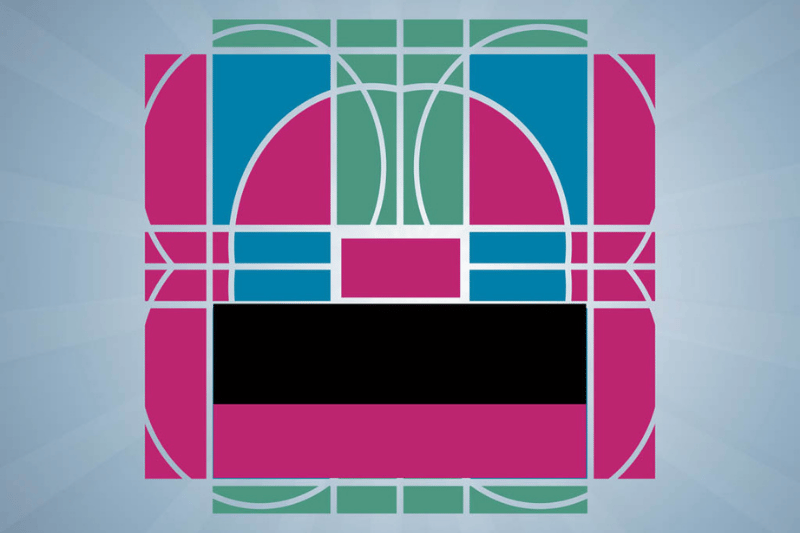
In a visual structure, shapes have several main functions that are important to building a whole design composition, such as the following:
Shapes form the basic structure of icons, symbols, illustrations, and layout elements. Using shapes, the object can be perceived as a cohesive whole.
Shapes help separate areas in a composition, be it as the background, text container, or emphasis element. Through proper shape management, the visual space feels more structured and controlled.
Shape variation serves as a visual marker to distinguish the category, function, or hierarchy level. The difference in shapes helps the audience scan information quickly without having to read the entire content in the design.
Simple and controlled shapes help eyes understand the design structure quickly. Likewise, the use of too complicated shapes will make a composition appear dense and reduce its visual comfort.
Human eyes detect silhouettes before noticing small details of a shape in design. As a result, the shape will be the significant focal point for capturing visual information. Before color, texture, or ornament are added, our eyes are drawn to the contour and limit of the shape, which serve as the composition’s foundation.
Because of that, we can comprehend and remember simple and controlled shapes more than the complex ones. The consistency of using shapes helps the audience recognize patterns and relationships between each element, making the visual flow appear clear and easy to follow.
Likewise, shapes that are too complicated or inconsistent can slow down the visual reading process. As a result, the design focus weakens, and the composition structure feels less directed, making the visual message poorly delivered.
A shape in design plays an important role, especially when it comes to branding and a visual system. It becomes one of the main elements that create a design’s visual identity and structure. The shapes of logos, icons, and graphic elements become the visual marker that makes a brand recognizable quickly, while the use of consistent shapes will make the brand system appear neat, professional, and memorable.
In addition, shapes play a role in arranging compositions by dividing space, emphasizing hierarchy, clarifying the reading flow, and maintaining visual balance so that information is easier to understand. This concept is closely related to design principles such as balance, repetition, and unity, which are discussed in the Principles of Design, so the consistent use of shape makes the visual system more cohesive and gives it a strong identity.
Many designs fail not because of the lack of ideas; rather, it is because the use of shape is not proper. The following are some of the most common mistakes we need to avoid when designing:
Too many different shapes in one plane can make a design appear too dense and challenging to scan. Without a clear grouping of shapes, the design can disrupt the visual flow and make the focal point less distinct.
Combining rigid, geometrical shapes with flowing, organic ones without a clear concept will create a visually discordant effect. Consistency is important in ensuring that the visual system is maintained and the design identity does not look random.
An overly complicated and excessively detailed shape in design can reduce readability, especially in small-sized media. Simple shapes are generally more favored for their effectiveness and strong visual appeal.
A shape in design that is too dominant or irrelevant can distract from the main message. Each shape should have a clear function in the composition, not just be a decorative element.
A shape in design is a fundamental visual element formed when lines connect to create a recognizable plane that the eye can identify. It serves as a primary building block within a composition. In a visual design structure, shapes interact with other elements and principles to form a cohesive system. Understanding shapes is essential to recognizing how simple forms can be arranged to produce clear, structured, and purposeful visual communication.
The next step would be to understand how shapes interact with other design elements, ensuring that the composition is more cohesive, structured, and comprehensible. By doing so, we can learn about the role of shapes in design as structural elements that are essential for creating an effective and organized visual composition.