Form and volume in design are visual elements that give depth and visual dimension. Shape creates a 2D design format, form presents a 3D appearance with additional depth, while volume conveys its mass. The design will no longer feel flat after presenting form and volume, giving the impression that it has more actual space and structure.
In the context of elements of design, form and volume help the audience understand the space’s relationship, visual focus, and elements’ hierarchy. Not only do 2D designs incorporate these elements, but they also leverage the depth of illusions created by light, shadow, and perspective. That’s why knowledge about form and volume in design becomes a crucial aspect in building a vibrant and controlled visual composition.
Table of Contents

In the talk on form and volume in design, form is a 3D shape with height, width, and depth. Moreover, form can be a real object, such as a cylinder, cube, or even 3D illusions presented in 2D media through specific visual techniques. In contrast to shapes that only have two dimensions, form gives a more realistic impression of space.
Meanwhile, volume relates to the perception of mass or the content of a form. Volume describes how dense, heavy, or “full” a form appears within visual space. Two forms of the same size can be perceived as having different volumes depending on lighting, proportion, and the surrounding context.
Simply put:
The knowledge about those above helps designers determine when a visual is represented as a shape or a form with a stronger volume impression.
Form and volume in design don’t always present as a real 3D object. Both can be achieved through a visual illusion that creates a 2D feel of depth and mass.
Below are the main approaches that build form and volume:
The difference between light and dark areas helps the eye recognize the protrusions and recesses in form, thus creating a 3D impression.
The different points of view and overlap between elements create an illusion of distance, allowing objects to appear to be at different spatial depths.
The size comparison between elements provides spatial context and helps the eye estimate the size and visual mass of the form.
These approaches allow form and volume to feel real, even though they are represented in a 2D medium.
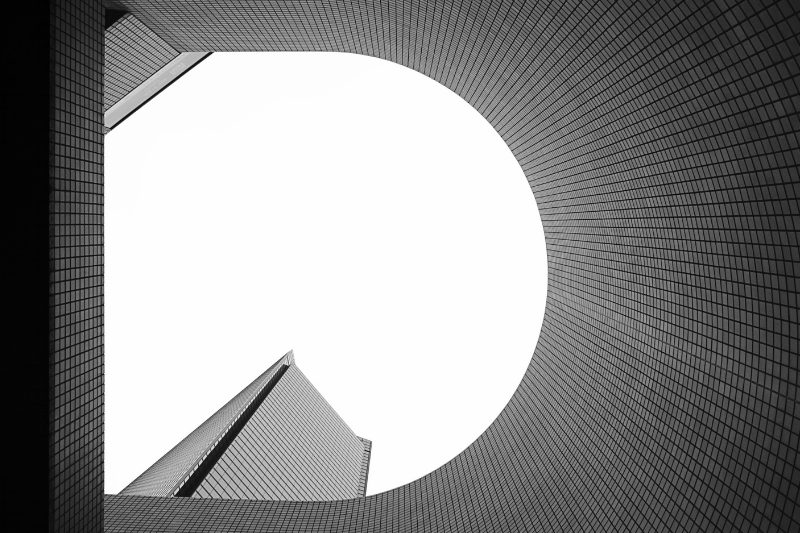
In terms of the visual perspective, form and volume in design help the audience understand depth, focus, and spatial relations in a composition. The presence of form and volume makes the visual elements not appear monotonous and flat but rather have a striking position and role in the design.
In this perspective, form and volume have a role in building structure and hierarchy. An element with a stronger volume tends to be the focus, while the element with a lighter volume functions as support. This distinction helps the eye in differentiating foreground and background naturally.
In visual design, the use of form and volume gives an impression of controlled depth and realism. Dimensional illusions create a visual that is easier to understand, because objects feel like they have a logical position and space, not just a pile of 2D shapes.
In this perspective, form and volume consistency help build a distinct visual character. The proper use of dimension, in real or illusion, needs to be aligned with the principle of visual setting, like balance and hierarchy, which has been discussed in the article of Principles of Design. Using the right arrangement, both form and volume strengthen the visual identity without compromising design clarity.
In the practice of form and volume in a design, errors often arise when designers are too focused on the visual effects without considering the structure and purpose of the composition. Here are some of the most common mistakes:
Overuse of volume can make the visuals feel heavy and tiring to see. Instead of clarifying focus, excessive dimensional effects blur hierarchy and disrupt the readability of the design.
Form and volume depend heavily on the logic of light. Inconsistency in the direction or intensity of shadows makes forms appear unnatural and destroys the illusion of depth.
It is important to note that implementing a 3D effect solely for decorative purposes often does not provide additional value. If form and volume don’t support focus or visual structure, those elements will become a distraction.
Too complex or irrelevant form can distract the focus. As a result, the main message of the design becomes unclear and difficult to understand.
Form and volume are design elements that give dimension and depth in a visual composition. Through the arrangement of 3D shapes and mass perception, designs will not feel flat but rather have a clearer and easier-to-read spatial structure.
In form and volume in design, these elements are crucial in building focus, hierarchy, and visual character. When used in a controlled and consistent manner, form and volume help the audience understand the relationship between elements and strengthen visual clarity. On the other hand, excessive or undirected use can actually blur the message and disrupt the readability of the design.