Nowadays, AI-generated design has become a real creative process. Designers are starting to use AI for concept and visual style exploration, as well as creating design assets on a big scale. Thus, the use of AI gives birth to fresh visual characters that influence the development of global design trends.
Even though AI has a big impact on global design trends, designers still play a key role in determining the quality and visual direction. AI can create many possibilities, but it still doesn’t understand the contexts, values, or deeper communication goals. Therefore, humans’ touch is crucial in creating a design that delivers well to the audience.
This article will talk about how designers use AI in the practice of modern graphic design and their visual characters. In addition, it also explores how the process and the AI result can shape new trends in 2026.
Table of Contents
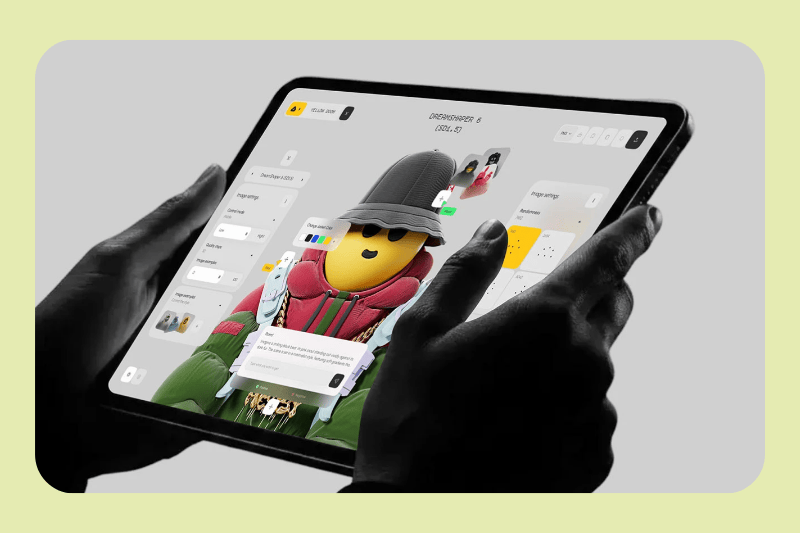
To put it simply, AI-generated design is a design approach that uses artificial intelligence to create visuals based on certain input. For instance, the input could include prompt texts, image references, styles, or other visual parameters. Therefore, in the context of graphic design, the definition extends beyond simply “creating images.”
One of the most common ways designers use AI today is through text to image generation where a simple written prompt is turned into a complete visual. Tools like GPT Image 2 have taken this further by adding true photorealism, multilingual text rendering, and 4K output quality. This means designers can now describe a concept in plain language and get a production-ready image in seconds, without needing advanced technical skills.
By 2026, designers’ abilities will no longer depend solely on technical skill but also on directing, curating, and evaluating the results of AI exploration. Visual selection becomes an integral process of AI-generated design because not all attractive results will suit the brand or audience’s needs.
In its practice, AI-generated design includes some of the roles below:
AI is the tool for creating illustrations, layouts, experimental typography, or visual compositions that previously needed longer time when made manually.
AI helps designers explore various concepts in no time, making the brainstorming process wider and more dynamic.
AI can copy, combine, or modify various visual styles, which then results in a more dynamic aesthetic approach.
What distinguishes AI-generated design from conventional software use is its ability to generate visual possibilities that are not entirely predictable. The results are often experimental, complex, and transcend more diverse aesthetic approaches. Therefore, in the context of 2026 design trends, AI-generated design isn’t just about new tools; it is also about changing the way designers interact with the creative process itself.
This design trend is becoming more relevant because it addresses the needs of the fast-evolving design industry. By 2026, the speed of flexibility and visual exploration will be the crucial aspects in the creative process.
Some of the main reasons why this trend is getting stronger:
With AI, designers can generate dozens to hundreds of visual variations in a short time. This speeds up the ideation stage without sacrificing creativity.
AI enables the creation of detailed textures, experimental compositions, and visual effects that previously required high technical skills or long production times.
Brands and clients now want more visual options, faster delivery times, and results that are more adaptive to trends, and AI helps meet these expectations.
AI opens the opportunity for unconventional approaches without having to spend many resources.
Therefore, in the context of the graphic design trend in 2026, AI-generated designs don’t stand alone as a trend. Rather, they become the foundation that strengthens the emergence of fresh visual styles.
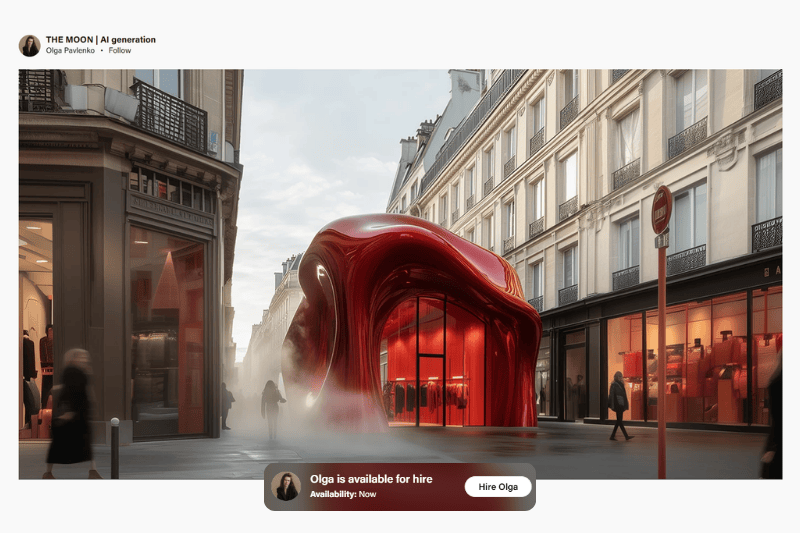
One reason AI-generated design stands out in the 2026 trend is that it has distinct visual characters. The visual results of AI often have a different quality from conventional design approaches.
The following visual characters commonly appear:
AI-generated design composition often exceeds the traditional pattern grid with a structure that is more flexible and dynamic.
Texture, lighting, and small elements are rich in detail, even on a big scale.
AI can combine two or more visual approaches at a time, creating a look that is unique and unpredictable.
While the visual is more realistic, it still possesses a dramatic touch or surreal quality that evokes a sense of unreality.
Some of the AI results attract attention because of their small imperfections that feel organic and not too stiff.
These characteristics make AI-generated designs often associated with a more progressive and futuristic visual approach in the 2026 design landscape.

AI-generated design doesn’t stop with the visual exploration; it expands further to various modern design needs. By 2026, the implementation will be wider and more integrated into the professional workflow.
The following are the common implementations of AI-generated designs:
Before manual refinement, AI assists in generating various potential references for logos, symbols, or visual directions.
Promotional visual creation becomes faster, especially for dynamic and trend-based content needs.
AI is often used to generate supporting conceptual illustrations or visual compositions that are difficult to create with traditional techniques.
In the brainstorming stage, AI helps expand visual references and speed up the idea validation process.
For projects that require a lot of visual variety, AI can speed up production without sacrificing exploration quality.
Although AI-generated design aids in the creation of designers’ works, it rarely appears in the final product without the designer’s input first. AI usually assists at the beginning, but humans are still responsible for ensuring the composition’s perfection, hierarchy, and consistency in the visual system.
The trend of AI-generated design doesn’t stand alone; instead, it is integrated with various visual directions that are evolving in 2026. AI plays a role in strengthening more experimental design approaches. It is where compositions are no longer tied to conventional structures, boldly exploring distortion, layering, and dynamic visual structures.
Moreover, AI speeds up the development of abstract and generative visuals. Organic patterns, algorithmic shapes, and complex textures can now be generated more quickly and flexibly, opening a wider scope of exploration for designers.
In the realm of surreal visuals and hyper-enhanced imagery, AI-generated design reinforces the distinct aesthetics of realism and fantasy. The result is dramatic, detailed, and emotionally compelling visuals, perfect for modern branding needs. Even in typography, AI encourages the combination of letter elements with illustrations, textures, or more experimental 3D effects.
While AI-generated design offers many conveniences, its use still requires clear control and direction. Without the right strategy, visuals can lose focus and become ineffective in communication.
Here are some common mistakes when using AI-generated designs:
The results of AI-generated images may appear appealing, but designers must still consider their relevance to brand identity or design goals.
Without a structured brief or parameters, the design outcome will be random and inconsistent.
Excessive details, textures, or visual effects will disturb the design hierarchy and readability.
AI-generated results that are too varied may cause designs to lose consistency in their identity.
Using AI will make the visual look impressive, but it often doesn’t deliver the message in the design effectively.
Even though AI-generated design opens the creative possibilities, the result in the end still depends on the designers’ skill in directing and perfecting the design.
AI-generated design has evolved from only a technology experiment to an important part of the modern design process. By 2026, this approach will speed up the workflow and influence the emerging aesthetic direction in the global design industry.
Furthermore, its ability to provide a wide visual exploration, complex detail, and experimental composition makes AI a catalyst in the development of design trends. However, AI is still just a tool; design isn’t determined by how advanced technology is, but by how appropriate the concept, context, and creative direction are.
In the landscape of Graphic Design Trends 2026, AI-generated design symbolizes a shift in the way designers work. AI doesn’t replace human creativity but rather expands the possibilities that can be realized through thoughtful creative decisions.